
Contact Dayton Door Sales Today!
Thank you! Your submission has been received!
Oops! Something went wrong while submitting the form.

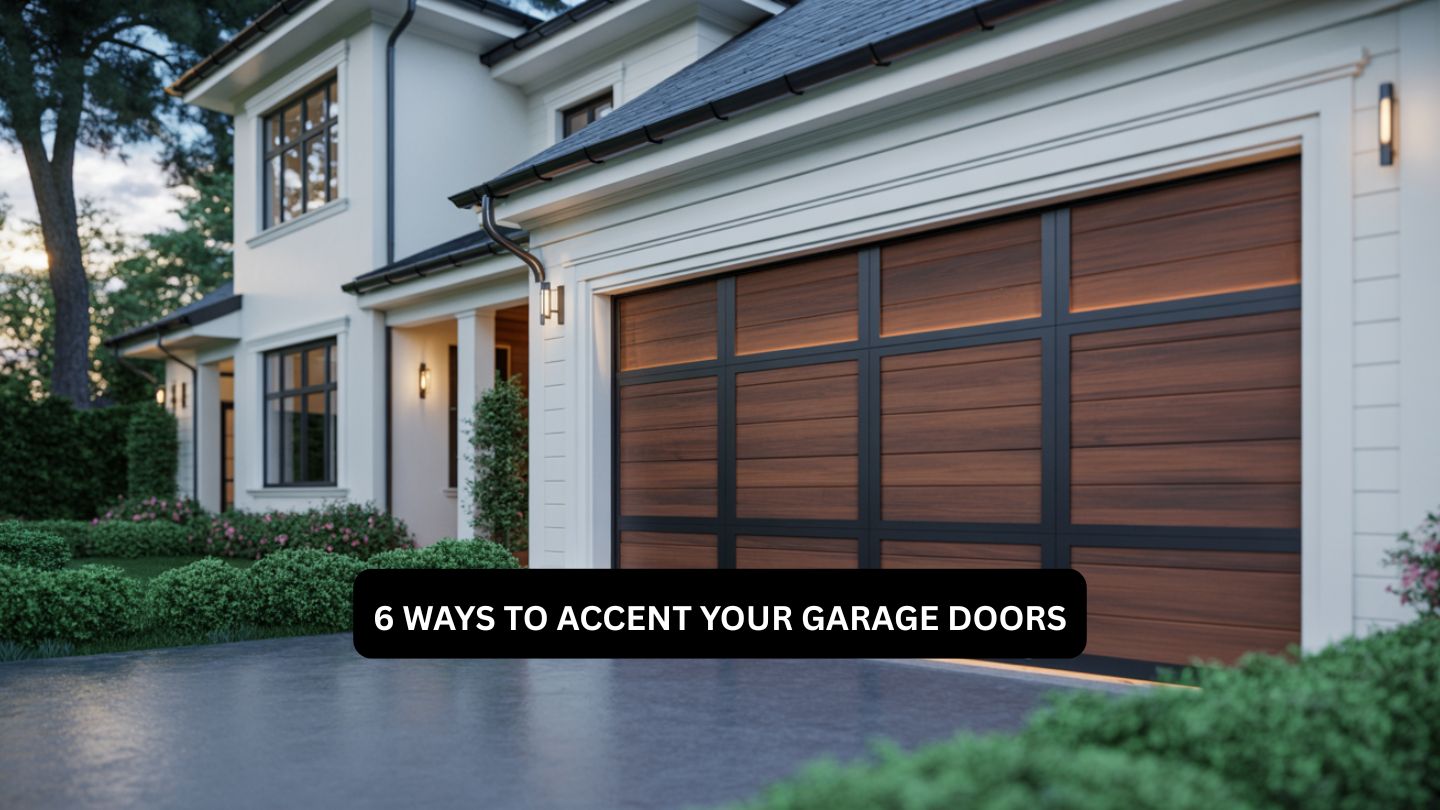
Your garage door often occupies 30 to 40 percent of your home’s front façade. That’s a lot of visual real estate to leave as an afterthought. Yet for many homeowners, the garage remains the one feature they overlook when updating their home’s exterior.
The good news? You don’t need to replace the entire door to make an eye-catching statement. Strategic accents can transform a builder-grade garage into a design feature that elevates your home’s curb appeal and ties the whole front elevation together.
In this blog, you’ll discover six practical ways to accent your garage doors, from architectural elements like arbors and stone surrounds to simple updates like paint and hardware. Whether you’re working with a 2025 remodeling budget or planning a weekend DIY project, these ideas will help you create visual interest without breaking the bank.
One of the first things visitors notice about a home is the proportions and depth of the front elevation. A flat, 16-foot garage door can dominate the façade in the wrong way, reading as a blank wall rather than an architectural feature. Adding an arbor or pergola above the door instantly introduces shadow, texture, and dimension.
A classic above-the-door arbor spans a double garage (typically 18 to 20 feet wide) using 6x6 posts and 2x6 cross beams. Staining the wood in a medium walnut or matching your existing trim ties the structure to the rest of the house. This relatively simple addition can shift the entire character of your home from standard suburban to intentional and custom. Because these additions are purely architectural and don’t affect door mechanics, they don’t change how long it takes to install a garage door or complicate future replacements, making them ideal for homeowners planning upgrades in phases.
Cottage and Traditional Styles
For a cottage or farmhouse aesthetic, consider arbors with curved rafter tails that soften the structure’s silhouette. Pair these with climbing plants like roses, clematis, or wisteria, excellent choices for temperate US climates in zones 5 through 8. The greenery adds a soft, romantic quality and connects the garage to the surrounding landscaping.
Mediterranean and Southwestern Looks
Mounting and Clearance Basics
At a high level, arbors attach via a ledger board anchored into wall framing above the door opening. The key detail: ensure the structure sits high enough that the garage door doesn’t strike the cross beams when opening. For doors with high-lift or standard curved tracks, this typically means mounting the lowest beams at least 12 to 18 inches above the door’s top edge.
Integrating outdoor-rated string lights or small pendant fixtures from the pergola beams adds another layer of accent, creating a welcoming glow at night that highlights the architectural investment.
Budget Expectations
|
Scope |
Estimated Cost (2025) |
|
DIY cedar arbor kit |
$600–$1,200 |
|
Custom-built pergola with professional installation |
$1,500–$2,500 |
|
Premium lumber with integrated lighting |
$2,000–$3,500 |
Thoughtfully designed lighting also supports efforts to make your garage doors more energy efficient, especially when paired with LED fixtures, motion sensors, and dusk-to-dawn controls that reduce unnecessary power usage while maintaining safety and visibility.
Modern lighting design around the garage is one of the fastest ways to improve curb appeal and nighttime security. A well-lit garage entrance feels intentional and polished, while poor or absent lighting makes even a beautiful door disappear after sunset.
Wall Sconces and Lanterns
Install matching wall sconces or lantern-style fixtures on each side of a two-car door. The key to getting scale right: choose fixtures that measure roughly one-quarter to one-third of the door’s height. For a standard 7-foot-tall door, that means sconces approximately 18 to 28 inches tall. Anything smaller looks like an afterthought; anything larger overwhelms the door.
Downlights and Spotlights
Subtle Strip and Accent Lighting
For a contemporary take, add discreet LED strip lights under an arbor, along pergola beams, or tucked into the header trim. This creates a soft glow that outlines the opening without the obvious fixture presence of traditional sconces.
Smart Lighting Integration
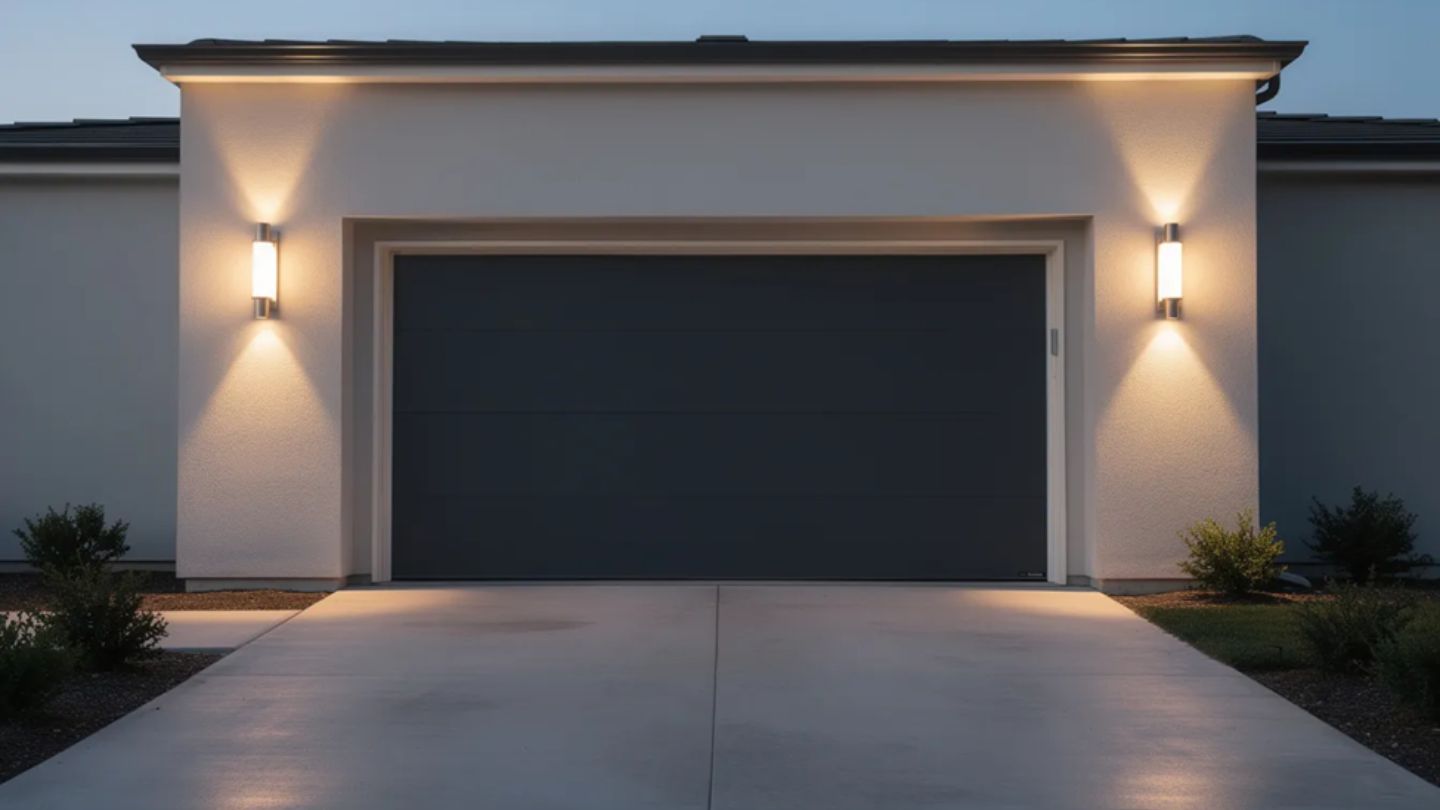
Motion sensor lights add convenience and security without leaving fixtures on all night. Modern smart home platforms in 2025 allow control via apps, voice commands, and automated schedules. Dusk-to-dawn photocells ensure accent lighting turns on automatically as evening approaches.
Before installing new wiring or relocating fixtures, check local electrical codes. Many homeowners can swap existing fixtures for new ones at the same location, but new electrical runs typically require a licensed electrician.
Read More: How Garage Doors Can Improve Your Home's Curb Appeal
Paint remains the most cost-effective way to accent an existing 8- or 16-foot garage door without replacing it. A single weekend and under $200 in materials can completely transform how the door reads from the street.
Strategic Color Choices
The right garage door color depends on your goals:
Paint decisions work best when guided by the same principles used in choosing a garage door, including architectural style, surrounding materials, and whether the goal is subtle cohesion or bold contrast within the front elevation.
Contrast Versus Blend
Consider whether you want the garage door to stand out or recede:
|
Approach |
When to Use |
|
Blend (door matches siding) |
Large garages that would otherwise dominate the façade |
|
Contrast (door differs from siding) |
When you want the garage as a visual anchor or focal point |
|
Subtle contrast (door slightly darker or lighter than siding) |
Transitional style homes seeking a refined, understated look |
For modern homes, soft greige, taupe, or off-black create a sleek appearance that suits contemporary designs. Traditional houses often benefit from bolder choices that reference historical carriage house colors.
Proper Prep and Materials
Getting a lasting finish requires proper preparation:
Adding Painted Details
Simple painted accents can visually upgrade basic flat or stamped-steel doors:
Many homeowners complete this project in a single weekend, spending less than $200 on primer, paint, and supplies. The investment pays off immediately in improved curb appeal.
Strap hinges, handles, and clavos can transform a plain roll-up door into something that reads as a custom carriage-house design. This is one of the most straightforward ways to add elegance to an otherwise unremarkable garage door.
Hardware Kit Options in 2025
Most decorative hardware kits include:
These pieces come in magnetic or screw-mounted versions. Magnetic hardware attaches instantly to steel doors and can be repositioned or removed without leaving holes. Screw-mounted hardware creates a more permanent, secure installation.
This approach aligns well with tips on how to choose a garage door when homeowners want the carriage-house look without committing to a full replacement, allowing style upgrades while preserving the existing door system.
Placement Guidelines
Proper placement makes hardware look intentional rather than stuck on:
Mixing with Existing Elements
Decorative hardware works best when it connects to other metal accents on your home’s exterior. If you have black window grilles, wrought iron railings, or metal light fixtures, matching the hardware finish creates a cohesive look. Bronze hardware pairs well with copper gutters or warm wood tones.
Installation Notes
Most hardware kits are a 1 to 2-hour DIY project, satisfying for an afternoon and easily reversible if you sell the house or update the façade later. The critical point: avoid attaching pieces over the moving joints between door panels. Hardware should sit securely within individual panels, where it won’t interfere with the door bending as it rolls up the track.
Adding stone veneer or brick around the garage opening makes even standard steel doors feel custom and upscale. This approach shifts attention from the door itself to the entire composition, creating an entry that looks like it belongs to a much more expensive house.
Stone and Brick Veneer Applications
The most common approach wraps the lower 2 to 3 feet of the garage façade with manufactured stone or thin brick veneer. This technique works especially well when it ties into existing stone on porch columns, foundation walls, or a front entry surround.
For a more dramatic effect, frame each side of the door with vertical stone or brick pilasters. Adding a contrasting header or keystone detail above the opening creates a true carriage-house effect that transforms the garage into an architectural statement.
Mixing Materials
Breaking up large blank sections of wall around double-wide doors keeps the façade from feeling monotonous:
This approach works particularly well on homes where the garage projects forward or occupies a significant portion of the front elevation.
Matching Undertones
Color coordination matters when mixing materials:
Installation and Cost Considerations
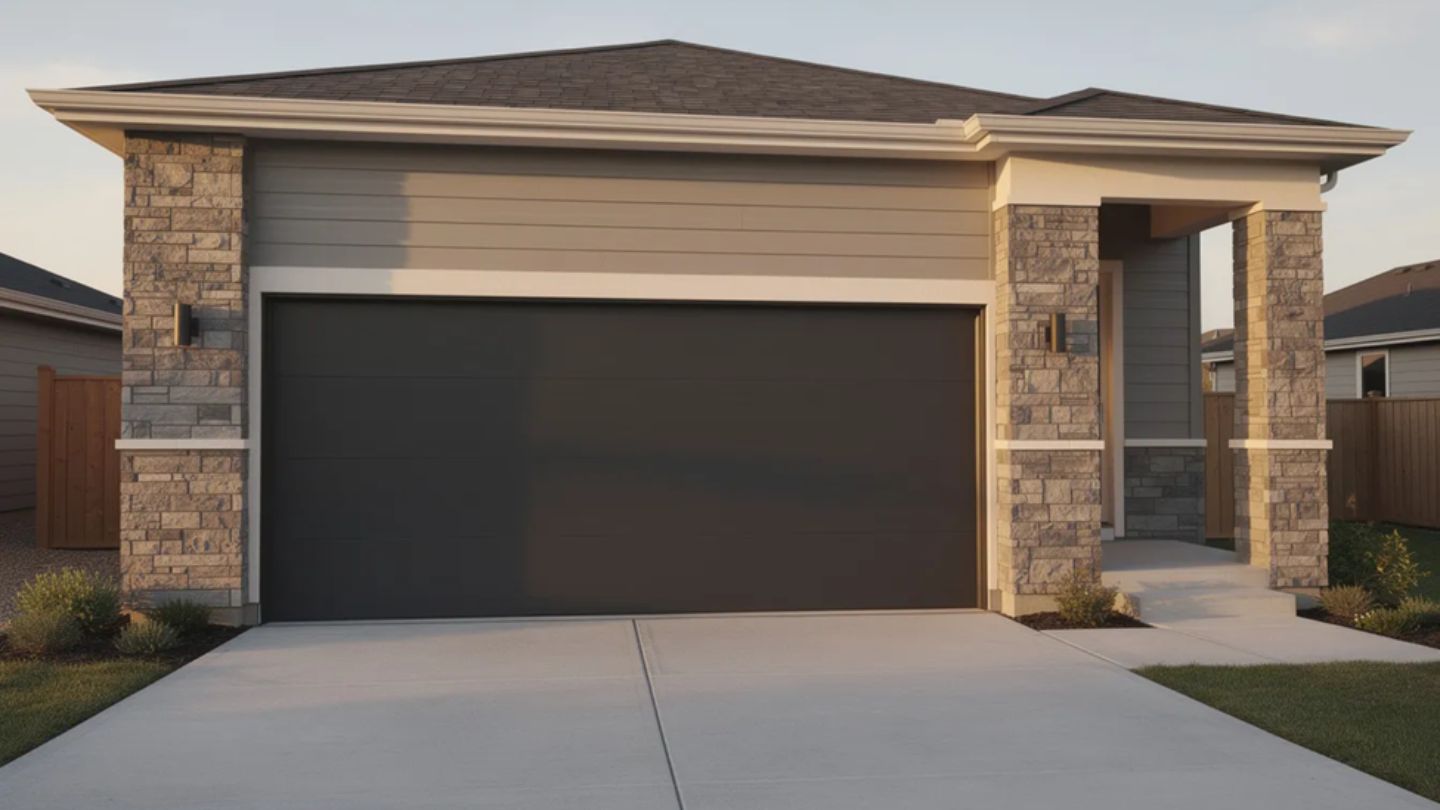
Thin stone veneer and panelized products available in 2025 make this upgrade feasible as a 2 to 3-day project for professionals. Expect to pay roughly $15 to $35 per square foot installed, depending on the product and local labor rates.
Example Application
A 1990s suburban home with basic vinyl siding and builder-grade steel doors can be modernized by adding ledgestone pilasters on each side of a double garage. Paired with new carriage-style hardware and a fresh coat of charcoal paint, the transformation takes the home from dated to contemporary without touching the original door.
Adding or upgrading garage door windows brings natural light into the space while creating an architectural accent line across the top of the door. This detail alone can elevate a basic door from utilitarian to intentionally designed.
Window Layout Options
Different layouts suit different architectural styles:
Glass Options for Privacy and Light
Frosted glass windows, seeded glass, or tinted insulated panels offer privacy while still illuminating the garage interior. This matters if you store vehicles, tools, or equipment you’d rather not display to passersby.
Any modification that adds weight to a door reinforces the importance of routine maintenance and understanding how often you should have your garage door inspected, since springs, tracks, and openers must remain properly balanced for safe operation.
Matching Existing Windows
Coordinate the grille pattern (muntins) with your house windows:
|
Grille Style |
Best For |
|
Colonial (6 or 8 lights) |
Traditional, Cape Cod, Colonial homes |
|
Prairie (perimeter grilles only) |
Craftsman, transitional styles |
|
No grid |
Modern and contemporary designs |
Retrofit Considerations
On older doors (10+ years), retrofitting windows can stress springs that weren’t designed for the added weight. In these cases, upgrading the entire top section or replacing the full door may be more practical and safer than cutting into existing panels.
Budget-Friendly Alternatives
For homeowners not ready to invest in new panels, faux window decals or magnetic window kits offer a temporary, budget-friendly accent. These won’t admit natural light, but they add the visual suggestion of windows and can be removed without damage.
Pairing Glass with Lighting
Glass accents shine brightest when paired with complementary lighting. Spotlights or sconces positioned to catch reflections emphasize the new detail at night, turning the windows into a glowing design element after dark.
Individual accents look best when they support a unified design vision. Before purchasing materials, step back and consider how color, hardware, lighting, and architectural elements will work together. The goal is a front elevation that looks intentional, not a collection of unrelated upgrades.
Create a Mood Board
Before buying anything, use online tools or apps to pull together samples of your roof shingles, stone, siding, and front door color. Seeing these elements side by side helps identify whether a new accent color or material will harmonize or clash.
Check Before You Build
HOA guidelines and local design rules can limit bold exterior changes. Colors, pergolas, and large lighting fixtures frequently fall under covenant restrictions. A quick call to your HOA or local building department before you start saves potential headaches and money down the road.
Start Somewhere
Even beginning with one update, like a fresh coat of paint or new sconces, can inspire a phased plan that transforms the whole front elevation over time. You don’t need to tackle all six accent strategies at once. The investment in curb appeal pays dividends every time you pull into the driveway.
A well-accented garage door can completely change how your home feels from the street. From architectural features like pergolas and stone surrounds to simple updates such as lighting, paint, and decorative hardware, these six strategies show how thoughtful design choices can turn a functional garage door into a defining exterior feature. Whether tackled all at once or phased over time, these upgrades offer a strong visual impact without requiring a full door replacement.
For homeowners looking for expert guidance and professional installation, Dayton Door Sales provides trusted solutions for garage doors in Dayton, which homeowners rely on for both style and performance. Serving nearby communities such as Kettering, OH, Tipp City, OH, and Bellbrook, OH, the team also supports exterior upgrades, including patio entry doors in Troy, OH, and Springboro, OH, helping homeowners create cohesive, polished exteriors from the garage to the front entry. Contact us to discuss garage door styles and installation options for your home.
What is the most cost-effective way to accent my existing garage doors in 2025 without replacing them?
Repaint doors in a complementary color, add simple decorative hardware, and replace wall sconces. These upgrades dramatically improve curb appeal; especially if you paint yourself at home.
Do I need a permit to add an arbor or pergola above my garage door?
Permit rules vary locally. Many municipalities require permits for attached arbors or pergolas projecting over four feet or using ground footings. Always verify with building departments and HOAs before building.
Will adding stone or brick veneer around my garage affect insulation or moisture?
Properly installed stone or brick veneer won’t harm insulation or trap moisture. Correct weather barriers, flashing, and drainage gaps are essential; poor installation can cause moisture problems and long-term wall damage.
Can I safely DIY new lighting or window additions on my garage door?
DIY fixture swaps are usually safe if the wiring stays unchanged. New electrical runs need permits and electricians. Garage door window cutouts should be handled by professionals to avoid structural damage.
.jpg)


