
Contact Dayton Door Sales Today!
Thank you! Your submission has been received!
Oops! Something went wrong while submitting the form.

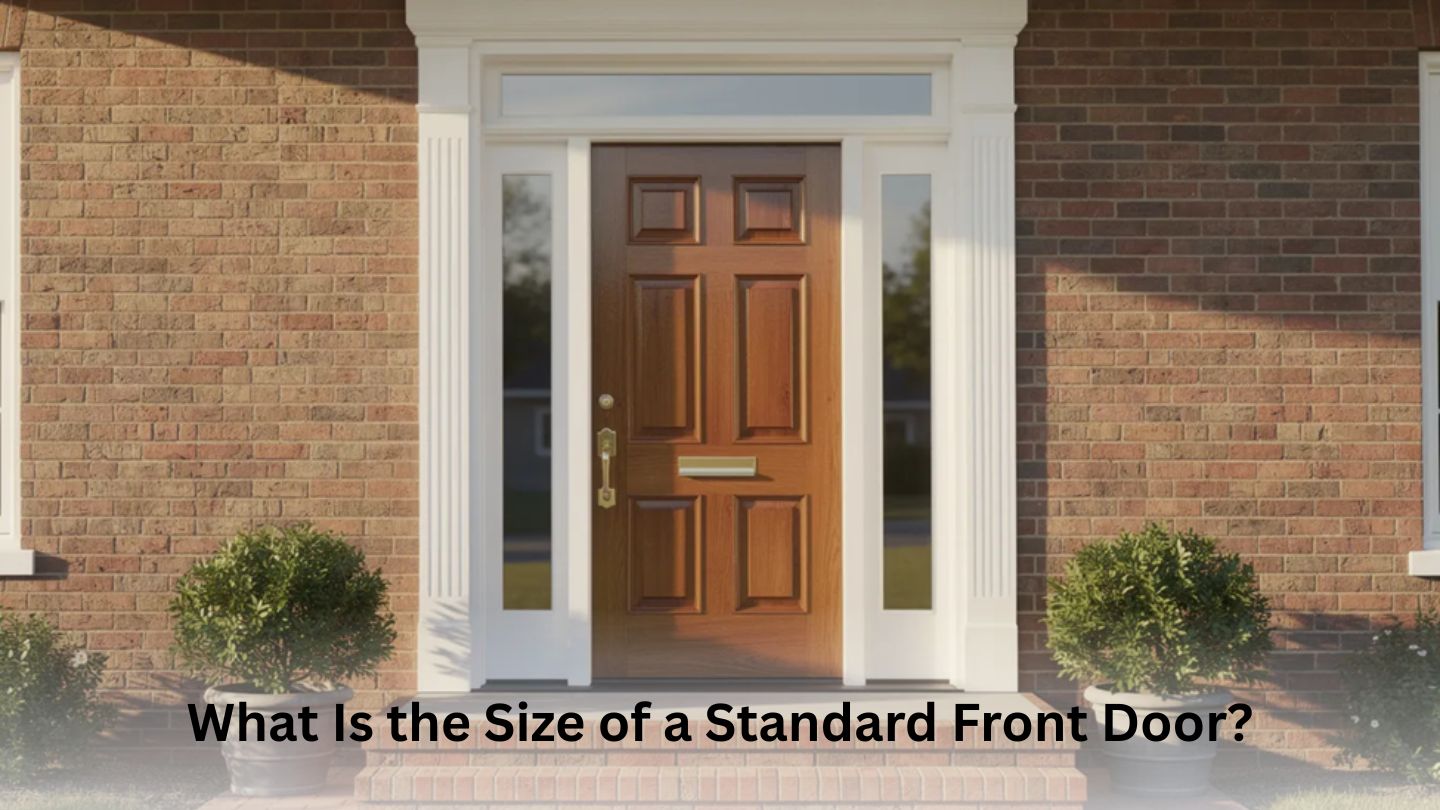
Front doors play a key role in a home’s functionality, security, and overall appearance. Choosing the right dimensions affects accessibility, energy efficiency, and design consistency. Door sizes can vary based on building codes, architectural style, and personal preferences. Understanding standard measurements helps simplify planning and installation. In this blog, we break down common front door sizes and what to consider before selecting one.
In modern U.S. construction, the standard front door size measures 36 inches wide by 80 inches tall, with a door thickness of 1 3/4 inches. This has been the go-to size for most homes built after the 1980s, and it remains the most widely stocked option at suppliers and home improvement stores across the country.
When we talk about “standard size,” we’re referring to just the door panel itself, not the frame or the opening in your wall. This dimension has become the industry norm because it balances practical needs with construction efficiency.
Most common residential entry door sizes include:
This 36-inch width provides roughly 32 inches of clear opening after accounting for hinges and jambs, enough space for comfortable passage, moving furniture and appliances, and meeting basic accessibility guidelines. The size also works well with stock hardware, pre-made storm door options, and standard framing practices.
If you’re buying a replacement door in the Dayton, Ohio area, most standard entry doors are sized in inches, not millimeters. A common 36” x 80” front door is often labeled as a “3/0 x 6/8” door in local stores and by contractors, meaning 3 feet wide and 6 feet 8 inches tall.
Accurate front door sizing depends on understanding three related but distinct measurements: the door slab, the door frame (prehung unit), and the rough opening. Each one plays a specific role in the installation process, and mixing them up is one of the most common reasons homeowners end up with doors that don’t fit.
Here’s a quick reference for a standard door:
|
Measurement Type |
Typical Dimensions (for 36” x 80” door) |
|
Door Slab |
36” x 80” x 1 3/4” |
|
Prehung Frame |
Approximately 37 1/2” x 81 3/4” |
|
Rough Opening |
Approximately 38” x 82” |
These numbers can vary depending on the manufacturer, jamb thickness, and threshold design, so always check the specific product specs before ordering.
The door slab refers to just the door panel without hinges, jambs, threshold, or weatherstripping attached. When you see front door sizes listed as “3/0 x 6/8” in industry shorthand, that’s the slab measurement, 36 inches wide by 80 inches tall.
Standard front entry slabs are usually 1 3/4 inches thick, which provides the structural integrity needed for exterior door applications and accommodates standard locksets and deadbolts. You’ll find common slab size options of 30, 32, and 36 inches wide, with heights extending to 84 or 96 inches in contemporary designs.
High-performance or ultra-efficient slabs designed for extreme climates can run thicker, sometimes 2 1/4 to 2 1/2 inches, to accommodate additional insulation. If you’re replacing only the slab in an existing door frame, you’ll need to match both the size and hinge placement locations precisely to avoid fit problems.
A prehung unit comes as a complete assembly: the door slab plus side jambs, head jamb, threshold or sill, and factory-installed weatherstripping and hinges. This is the most common choice for new construction or when your old door frame is damaged, warped, or letting in drafts.
For a 36 x 80 inch slab, the external dimensions of a typical prehung frame run slightly larger, around 37 1/2 inches wide by 81 3/4 inches tall. This is the size that needs to fit within your rough opening, with room left for shims and insulation.
Wall thickness matters here, too. Homes with 2x4 walls need a different jamb depth than those with 2x6 construction. The jamb should align flush with both interior and exterior wall finishes for a clean installation.
The rough opening is the framed hole in your wall, the space between the wall stud framing members and the header, measured before any trim, casing, or finished flooring goes in.
As a general rule, the rough opening should be about 2 inches wider and 2 to 2 1/2 inches taller than the door slab. For a standard 36 x 80 inch entry door, that typically means a rough opening around 38 inches wide by 82 inches tall. This extra space allows for shimming, leveling, and proper insulation around the frame.
Getting your rough opening dimensions right is critical for exterior doors. Gaps or poor sealing can lead to binding doors, air leaks, and water intrusion, especially with weather exposure. If you’re unsure about your framing conditions, having a contractor verify the rough opening before ordering a custom-sized unit can save significant headaches down the road.
While a single 36 x 80 inch door covers most entry doors in residential applications, other configurations like double doors and sidelights change the overall opening width and height requirements. Each configuration uses common slab sizes as building blocks, but total frame dimensions can vary widely depending on the design.

Single entry doors remain the default choice for most suburban and urban homes, making it important to understand broader considerations covered when choosing the right doors for your home based on layout, function, and long-term use. They’re cost-effective, energy-efficient, and work well in standard-width entries without requiring major structural modifications.
The most common single door size is 36 inches wide by 80 inches tall. In older or smaller homes, 32 x 80 doors are still frequently found. Narrower doors at 30 inches sometimes appear on secondary entries, side doors, or compact cottages, though these can feel tight for accessibility purposes.
Single doors can be paired with a transom window above to bring in natural light without widening the door opening, while design elements like finish and tone remain important when selecting the best front entry door color to complement your home’s exterior. When deciding between 32 and 36-inch widths, consider furniture movement, stroller or wheelchair passage, and local code requirements; a few extra inches can make a meaningful difference in daily convenience.
Double entry doors feature two operable slabs, commonly each 30 or 36 inches wide, creating a total width of 60 to 72 inches. You’ll see this configuration on larger, custom, or traditional homes where a formal, symmetrical façade makes a statement.
The practical benefits go beyond curb appeal: double doors make it easier to move large furniture, improve traffic flow during gatherings, and create a more dramatic entrance. They’re often the choice for architectural styles like Colonial, Mediterranean, or contemporary designs with grand entryways.
The trade-offs include more glass area and additional seams, which can affect energy efficiency unless you invest in high-quality materials like insulated glass and premium weatherstripping. Double doors also require sufficient porch depth and interior clearance for proper door swing without hitting furniture or railings.
Sidelights are narrow vertical glass panels installed on one or both sides of a single door, typically 10 to 14 inches wide each. A single 36-inch door with two 12-inch sidelights brings the total width close to 60 inches while dramatically increasing light and curb appeal.
Style options range from full-lite sidelights for maximum daylight to half-lite designs for more privacy. Decorative glass or frosted glass panels offer security benefits while still admitting light. When adding sidelights, you’ll typically order a prehung system where the door and sidelights are integrated into a single frame unit.
In colder climates, choose sidelights with low-E, insulated glass to avoid cold drafts and condensation near your entry. This keeps your home comfortable while maintaining the aesthetic benefits of glass panels.
Getting accurate door measurements before ordering saves time, money, and frustration, especially when factoring in practical guidance outlined in what to consider when replacing your entry door to avoid fitment and installation issues. The process differs slightly depending on whether you’re replacing just the door slab or the full prehung unit, but the fundamentals remain the same: measure carefully, record precisely, and verify before you order.
Basic tools you’ll need:
Measure in multiple spots, top, middle, and bottom for width; left side and right side for height. Older homes often have openings that are out of square or warped from decades of settling. For homes with brick or stone façades, double-check clearances to avoid interference with existing masonry or trim details.
To measure your existing door, close it and work from the interior side. Measure only the panel itself, not including weatherstripping, stops, or casing.
Step-by-step instructions:
Record all measurements to the nearest 1/16 inch and compare them with standard sizes to determine if your existing door is off-the-shelf or custom. Most exterior doors run 1 3/4 inches thick; if yours differs significantly, that affects your replacement options.
If your existing door is badly warped or damaged, its dimensions may not be accurate. In that case, verify against the frame size where possible.
To measure the frame, work from the interior:
These measurements help match a new door to your existing rough opening with minimal modifications. Don’t include exterior brickmould or interior casing in your frame measurements; these are trim elements, not structural.
Write down hinge locations, hinge size, and door swing direction if you plan to reuse part of the frame or hardware. A standard door typically has three hinges, with specific spacing that varies by manufacturer.
Accessing the rough opening usually requires removing the interior casing on one side of the door. Use a utility knife to score the paint line, then carefully pry off the trim with a flat bar.
With the framing exposed, measure the rough opening width between the exposed wall studs and the height from the subfloor to the bottom of the header. Note any variations; a difference of more than 1/4 inch between top and bottom measurements indicates the opening is out of square.
The rough opening should exceed the prehung frame by about 1/2 to 3/4 inch in each direction to leave room for shims and insulation foam. Also note any obstacles like HVAC ducts, electrical conduits, or brick returns that could limit changes to your door size.
If opening the wall isn’t practical, you can rely on standard sizing guidelines, but consider professional help before ordering a custom unit.
Stand outside your home, facing the door, to determine the swing direction:
Door swing direction doesn’t change the door size, but it’s critical when ordering, especially with pre-bored locksets and decorative panels. Consider interior furniture placement, wall switches, stairs, and exterior steps when choosing swing direction.
In hurricane-prone regions, outswing doors are often recommended or required because they provide better resistance to wind pressure trying to push the door inward.
Front door size choices are influenced by more than personal preference, as entry doors impact your home’s first impression and play a role in accessibility, usability, and perceived value. Building codes, accessibility needs, and local climate all play a role in determining the right door for your home.
Many U.S. jurisdictions reference the International Residential Code (IRC) and accessibility standards similar to ADA guidelines. While residential homes aren’t always required to meet full ADA specifications, choosing a door that does makes your home more functional for everyone and more attractive to future buyers.
Most building codes call for at least one egress door with a clear opening of around 32 inches when the door is open 90 degrees. “Clear opening” is measured between the face of the door and the stop, which is why a 36-inch slab is commonly used to achieve this minimum comfortably.
Accessibility guidance also recommends that thresholds be no more than about 1/2 inch high and beveled to reduce tripping hazards. This is especially important for homes where residents use wheelchairs, walkers, or have mobility challenges.
If you’re remodeling an older home with narrower doors, widening the entry to 36 inches often makes sense, both for code compliance and for aging in place. That extra few inches of passage width can make a significant difference in daily life.
Exterior door thickness, core material, and seal quality all contribute to energy efficiency, especially when comparing materials like wood, steel, and fiberglass, which aligns with guidance on choosing the right material for your entry door for performance and durability. Steel front doors and fiberglass front doors with foam-filled cores can achieve R-values up to R-20, compared to basic wood doors at around R-2.
Standard entry door thickness runs about 1 3/4 inches, but premium energy-efficient models may be 2 1/4 to 2 1/2 inches thick with enhanced insulation. Wider or taller doors have more surface area and may lose more heat if not properly insulated and weather-stripped.
For homes in cold or hot climates, look for insulated cores, low-E glass, and Energy Star certified performance ratings. Remember that a correct fit within the rough opening matters as much as the slab’s R-value; large gaps or poor shimming can negate efficiency gains and leave you with drafts despite investing in a high-performance door.

Understanding standard front door sizes helps homeowners make informed decisions about functionality, appearance, and installation. The right dimensions ensure proper fit, smooth operation, and better insulation while complementing your home’s architectural style. Planning ahead with accurate measurements avoids costly adjustments and supports long-term performance and curb appeal.
At Dayton Door Sales, we help homeowners choose doors that fit their space, style, and performance needs, such as entry doors in Kettering. From residential entry and patio doors, garage doors, heritage series entry and patio doors, openers and accessories for garage doors, door service and repair, to patio entry doors in Springboro and Troy, quality options matter when selecting. If you’re planning an upgrade or replacement, work with us to explore reliable door solutions designed to enhance your home’s security, comfort, and overall value.
Measure the door slab’s width, height, and thickness and compare them to standard dimensions. Doors that measure 30, 32, or 36 inches wide and 80, 84, or 96 inches tall are standard. Irregular measurements typically indicate a custom door.
Installing a thicker door often requires replacing the frame, hinges, and hardware. Existing frames are built for specific door thicknesses, and lockset and hinge placements must align correctly. A prehung door unit is usually the best option for such upgrades.
Most exterior front doors require a clearance of about 1/4 to 1/2 inch beneath the door. This space accommodates the threshold and door sweep while preventing drafts and water intrusion. Proper clearance ensures smooth operation without dragging on flooring surfaces.
In many cases, replacing a door with the same size does not require modifying the rough opening. However, switching to a different height, width, or door style may require reframing. Older homes often have non-standard openings, which can affect whether adjustments are needed.
.jpg)


