
Contact Dayton Door Sales Today!
Thank you! Your submission has been received!
Oops! Something went wrong while submitting the form.

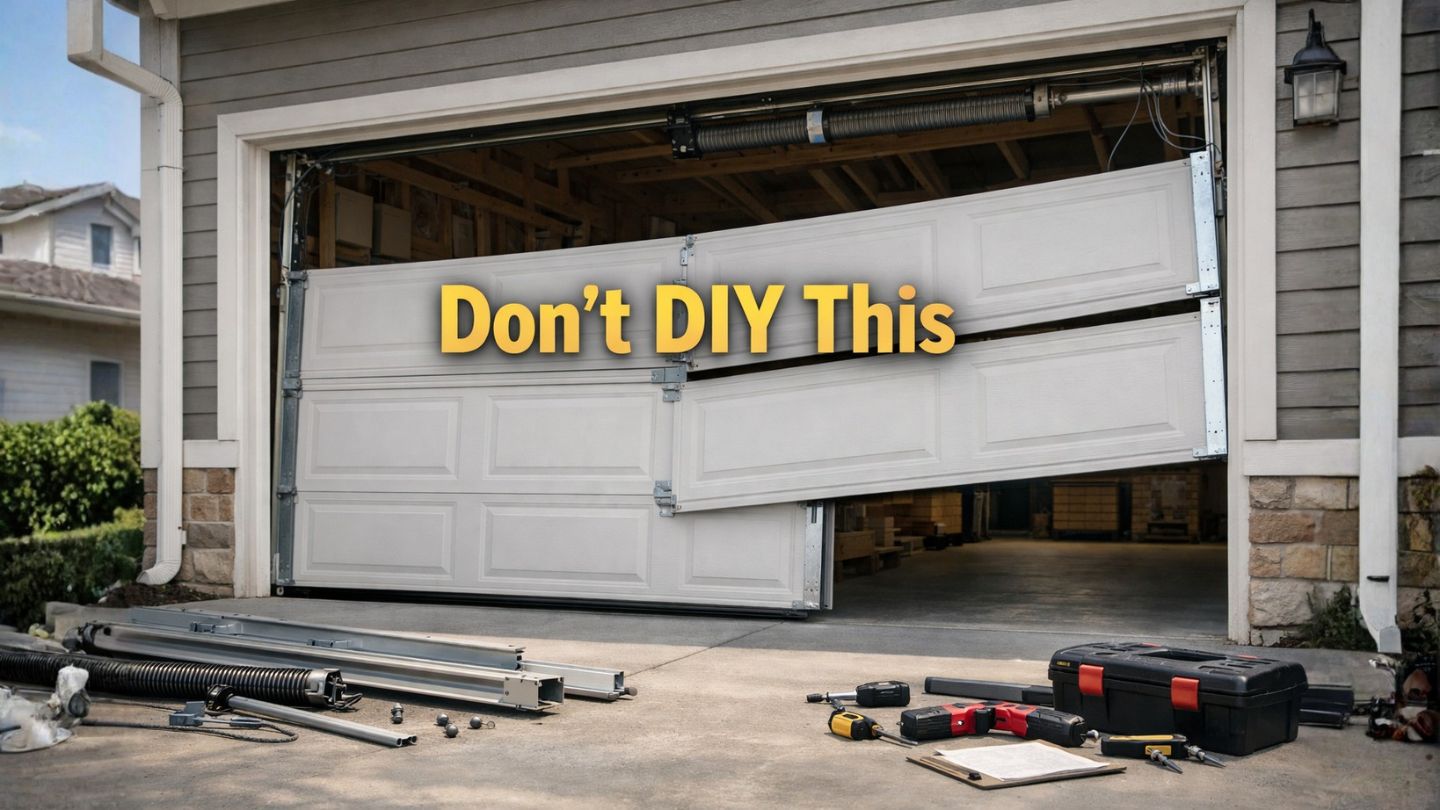
That garage door sagging on its tracks might seem like a weekend project you can tackle yourself. After all, how hard can it be to save money by handling a DIY garage door installation? The answer: dangerously hard, and potentially deadly. Beavercreek homeowners attempting garage door installation without professional help face torsion springs under hundreds of pounds of tension, doors weighing several hundred pounds, and complex electrical systems that require specialized tools and proper training.
This blog explains exactly why a DIY approach to garage door systems is a bad idea for Beavercreek residents. You’ll learn about the life-threatening safety risks, the costly repairs that result from incorrect installations, the building code requirements specific to our area, and why professional garage door installers deliver far better long-term value than any initial savings from doing it yourself.
Garage door springs are not like other household components. Torsion springs store enough force to counterbalance doors weighing 250 to 300 pounds for a standard 16’ × 7’ insulated steel door. When these springs are wound incorrectly or release unexpectedly, they can send metal flying with enough force to sever limbs, cause crushing injuries, or kill.
The sheer weight of a garage door itself creates immediate danger. Without the counterbalance spring system functioning properly, that heavy door becomes a several-hundred-pound falling object. A 16-foot double-car door can easily weigh over 300 pounds, more than enough to cause fatal crushing injuries if it drops while someone is underneath.
Industry data reveals the scope of this problem: approximately 20,000 to 30,000 garage door-related injuries occur in the United States annually. Recent statistics indicate over 30,000 emergency room visits per year are linked to garage doors, with DIY repairs and installations increasing as homeowners attempt to save money during periods of economic pressure. These injuries include thousands of crushing incidents, hundreds of spring-related trauma cases, numerous lacerations, and finger amputations from pinch points.

Safety sensors must be installed correctly and calibrated precisely to function as intended. These photo-electric sensors detect obstructions in the door’s path and trigger automatic reversal, a federal requirement since the early 1990s. When installed incorrectly, these safety features fail, creating the exact hazard they were designed to prevent.
Emergency release mechanisms have specific mounting requirements, including proper height placement, lever accessibility, and redundancy features. These systems must function during power outages or opener failures. Many homeowners handling DIY garage door repairs mislocate or improperly tension these components, leaving families vulnerable during emergencies.
The mounting surfaces above your door opening need to structurally handle dynamic loads. When your garage door moves, weight transfers through pulleys, tracks, and spring shafts to headers and supporting framing. Without adequate reinforcement, which trained professionals evaluate on every job, these structures can deform, fail, or collapse over time.
Today’s garage door systems involve far more than just a door on tracks. Proper installation requires precision across multiple interrelated components that must work together flawlessly, and understanding what to expect during professional garage door installation underscores just how many detailed steps trained technicians manage on your behalf.
Track alignment demands perfection. Vertical and horizontal tracks must be square, level, and aligned with each other for smooth operation. Even small misalignments lead to grinding noises, uneven wear on rollers and bearings, and increased resistance that burns out garage door opener motors prematurely. Without proper tools and measuring equipment, homeowners cannot achieve the precision required.
Spring calibration involves matching wire diameter, inside diameter, length, and number of coils to your specific door’s weight. Different color codes correspond to spring ratings and capacities, a system that means nothing to someone without proper training. Overwinding or underwinding torsion springs yields imbalance, door creep, or motor burnout.
Smart garage door opener integration adds another layer of complexity. Modern systems involve electrical wiring, safety sensor circuits, backup batteries, WiFi connectivity, and app integration. Some warranties and codes require this low-voltage electrical work to meet specific standards. Security features like rolling-code remotes and encryption require proper configuration; mistakes create vulnerabilities that compromise your home’s safety.
Beavercreek’s Ohio climate creates additional requirements. Insulated garage doors reduce heat loss during cold winters, but insulating panels increase door weight, altering required spring specifications. Moisture exposure leads to rust and corrosion, making proper weather sealing and thermal breaks essential. When choosing a garage door based on materials, styles, and budget, these climate and performance factors are critical, and DIY installations frequently fail to account for these environmental factors.

Alignment errors top the list. Tracks that aren’t plumb, panels that aren’t square, and mis-angled braces lead to grinding, binding, and uneven lifting force. These problems cause premature failure of rollers and tracks, repairs that cost far more than professional installation would have.
Incorrect spring tension creates immediate problems. Springs that are undersized or not wound the correct number of turns result in doors that are dangerously heavy, close too fast, or lift spontaneously. Each scenario creates a serious injury risk.
Electrical wiring errors compromise safety systems. Many homeowners attempt to bypass safety sensors that seem finicky, fail to properly ground systems, or miswire openers that then lack auto-reverse features. Using non-UL-listed parts or skipping safety cables on extension springs creates ticking time bombs in your garage.
The initial savings from DIY garage door installation rarely materialize. A torsion spring replacement alone typically costs $200 to $500 when handled by professionals. But a DIY mistake, such as scratching finishes, misaligning tracks, or selecting incorrect springs, often requires full door replacement, running $800 to $3,000 for a typical double door.
Hidden costs add up quickly. Specialized tools like spring winding bars, safety cable kits, torque wrenches, and gauges represent significant investments for a one-time project. Multiple trips to hardware stores, incorrect parts that can’t be returned, and time investment easily lead to DIY expenses that exceed professional quotes.
Manufacturer warranties explicitly require professional installation. Hörmann’s warranty, for example, mandates that doors be installed by professionals. Similar requirements exist across major manufacturers, meaning your DIY installation voids protection on components that may fail through no fault of your own.
Property damage exposure extends beyond the garage. Poorly installed doors can damage structural elements like headers and jambs. Mechanical failures damage vehicles and personal property. Such defects reduce resale value and may result in insurance claims being denied when companies discover unpermitted DIY work.
Beavercreek operates under both city zoning ordinances and Greene County Building Regulations. Chapter 150 of Beavercreek’s City Ordinances adopts state residential codes, and garage door replacement or installation typically falls under “alterations” requiring permits and inspections.
Ohio Revised Code Chapter 505 mandates that residential construction, alteration, or repair comply with residential building codes administered by certified local building departments. DIY installations that don’t meet code potentially violate state law, creating legal liability beyond mere safety concerns.
Zoning permits are required for replacing or altering structures, including garages. Building permits managed by Greene County Building Regulation apply when structural changes are involved. For electric openers, electrical permits may be necessary. Navigating this permit process is routine for professional garage door installers, but overwhelming for homeowners.
Industry certification through IDEA (Institute of Door Dealer Education and Accreditation) requires technicians to meet technical, regulatory, and safety standards. This Residential Installer Certification ensures professionals understand the complex mechanisms involved and how to handle them correctly. A DIYer lacks access to this training and the oversight it provides.
Insurance companies typically require structural or mechanical modifications to be done to code by licensed contractors. If your DIY installation leads to property damage or injury, and the work was done without permits or by non-licensed persons, liability falls entirely on you. Claims may be denied outright.

Operational breakdowns occur far more frequently with DIY-installed garage doors. Mis-sized springs and misalignment increase wear on rollers, tracks, and bearings. Springs fail before their rated cycle life. Rollers bind and snap. Hinges bend. Regular garage door maintenance for a longer lifespan helps prevent these issues, but each breakdown still requires professional garage door repair, negating any money saved.
Energy efficiency suffers dramatically from poor installation. Gaps, leaks, and poor seals increase energy loss. For garages attached to homes, this means significantly higher heating costs during Beavercreek’s cold months. Moisture intrusion leads to rot and damage to floors and adjacent walls, costly damage that spreads over time.
Security vulnerabilities emerge from incorrect installations. Doors that don’t lift properly, openers with weak locking mechanisms, or misinstalled safety sensors compromise home security. Smart openers that are improperly secured may be vulnerable to hacking or unauthorized remote access.
Curb appeal and home value take direct hits from visibly poor installations. Misaligned doors, uneven panels, and visible DIY work may actually be signs your garage door needs replacement, and they signal to potential buyers that other shortcuts may exist throughout the property. Appraisers note unpermitted work, potentially requiring remediation before sale.
Attempting a DIY garage door installation may seem cost-effective, but it often leads to safety risks, improper setup, and costly repairs. Professional installation ensures your system operates smoothly, meets safety standards, and lasts longer, giving homeowners peace of mind and protecting their investment in the long run.
Dayton Door Sales is a trusted choice for homeowners seeking expert solutions. We proudly provide reliable garage door installation in Beavercreek, ensuring every project is handled with precision and care. We offer service and repair, garage doors, openers, and accessories for garage doors, entry, and patio doors, delivering complete solutions tailored to your needs. Reach out to us today to get the job done right with our professional expertise.
Torsion springs present the greatest danger. These springs store enough tension to counterbalance doors weighing 250-300 pounds, and incorrect handling causes sudden energy release that can sever limbs or cause fatal injuries. The sheer weight of garage doors themselves, often over 200 pounds, creates crushing hazards without proper equipment and the right tools to manage them safely.
Yes. Most manufacturers explicitly require professional installation to maintain warranty coverage. Hörmann, GDS, and similar manufacturers void warranties when installation or alterations are performed by anyone other than certified professionals. This leaves homeowners responsible for full replacement costs if components fail, even from manufacturing defects.
Beavercreek requires zoning permits for replacing or altering primary and accessory structures, including garages. Building permits through Greene County Building Regulation apply when structural changes are involved. Ohio Revised Code Chapter 505 mandates compliance with residential building codes. Electrical permits may be required for opener installations. Non-compliant work risks code enforcement, fines, and required removal and reinstallation.
Professionally installed garage doors with correctly sized components typically last 15-25 years for door panels, 10-20 years for springs, depending on cycle rating, and 10-15 years for openers. High-cycle springs rated at 25,000 or 50,000 cycles extend spring lifespan significantly. With proper maintenance, these components reach or exceed their rated lifespans, unlike DIY installations, where premature failures are common.
Verify licensing and insurance coverage. Look for IDEA certification or equivalent professional credentials. Request local references and check reviews from Beavercreek homeowners. Confirm the installer can pull required permits and understands the Ohio residential building code and local regulations. Ask about warranties on both parts and labor, and ensure transparency in pricing with written estimates before work begins.
.jpg)


