
Contact Dayton Door Sales Today!
Thank you! Your submission has been received!
Oops! Something went wrong while submitting the form.


Garage door openers play a key role in the convenience, safety, and daily operation of your garage. Different drive systems are designed to meet various needs, from quiet performance to long-term durability. Understanding how these mechanisms work can help homeowners choose an option that suits their home and usage patterns. Factors such as noise level, maintenance needs, and cost often influence the final decision. In this blog, we will compare belt and chain garage door openers to help you determine which option best fits your garage and lifestyle needs.
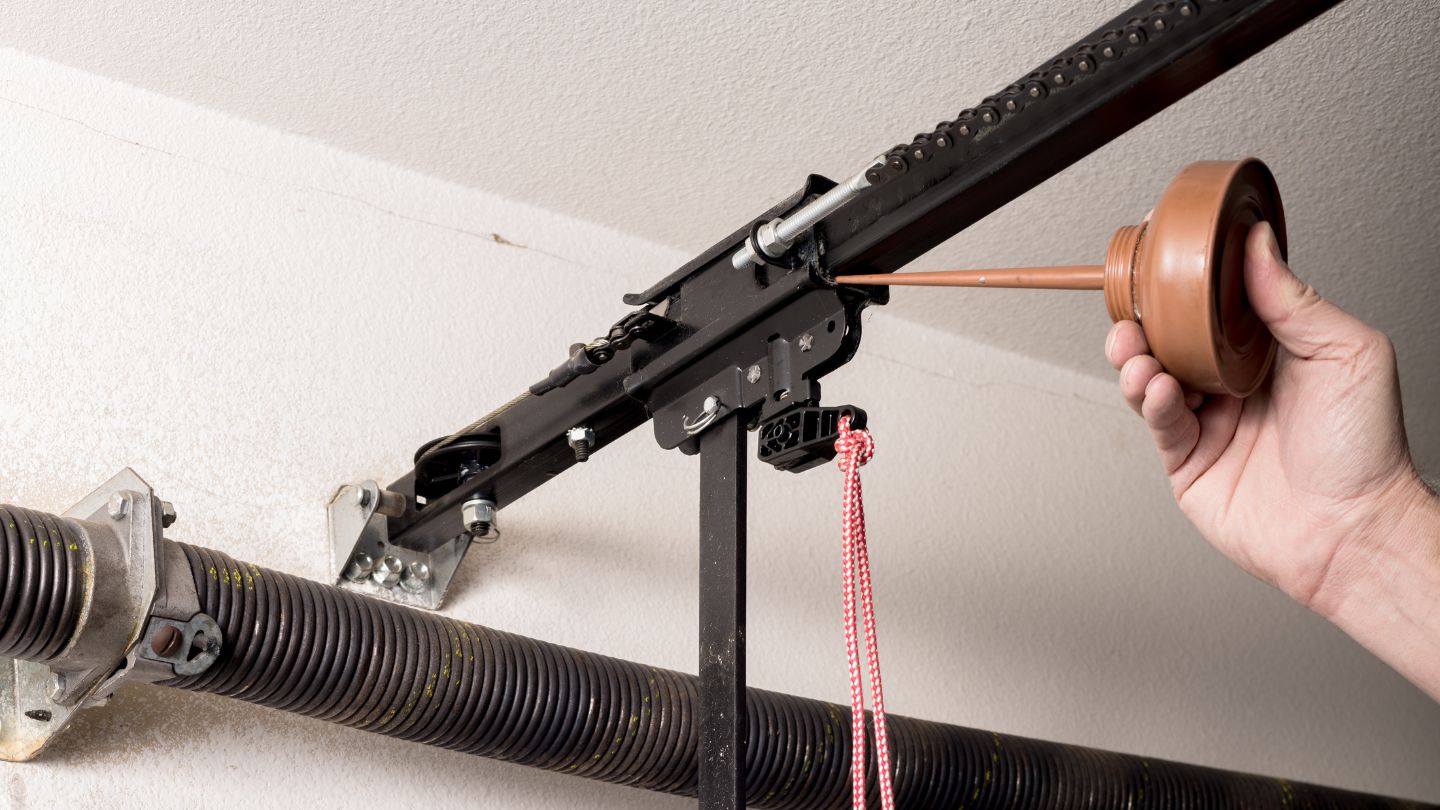
A chain drive garage door opener uses a metal chain—similar to a bicycle chain—that runs along a rail and pulls a trolley connected to your garage door. As the motor turns, the chain moves the trolley back and forth, which lifts and lowers the door.
Chain drive openers have been the residential standard since at least the 1980s and remain the most common type in use today. Their popularity comes from proven reliability and straightforward pricing.
For many homeowners, the price point is the biggest draw. You can typically find chain drive models with 1/2 to 1 HP motors ranging from about $150 to $350 before installation labor. That makes them the most accessible option when budget is a primary concern.
Chain drives are especially well-suited for heavier doors, including double-wide steel doors, solid wood doors, or commercial-style doors that see frequent daily use. Compared to belt drives, chain systems produce more noise and vibration during operation—something to consider if your garage shares a wall with living spaces or sits directly below bedrooms.
Read More: Why Your Garage Door Makes Loud Noise When Opening (And How to Fix It)
The mechanical process is straightforward:
The chain is tensioned along the rail and connected directly to the opener carriage. The chain running assembly unit keeps everything aligned and moving smoothly.
Like belt drive models, modern chain systems include photo-eye safety sensors and auto-reverse mechanisms that have been required by safety codes since the 1990s. These features stop and reverse the door if something is detected in its path.
Chain drives typically offer the lowest upfront cost among drive garage door openers, making them attractive for homeowners watching their budget. The metal chain provides very strong and reliable lifting power—ideal for heavy doors that would strain other systems. Parts are widely available since chains have been the industry standard for decades, and replacement components are competitively priced. For heavier garage doors or high-cycle applications, chain drives deliver dependable performance.
A belt drive garage door opener replaces the metal chain with a reinforced rubber, polyurethane, or fiberglass belt. This simple change dramatically reduces noise and delivers smoother door movement.
Belt drive models with 1/2 to 1 1/4 HP motors typically range from about $200 to $450 before installation—roughly $50 to $150 more than comparable chain systems. The price premium reflects both the materials and the quieter operation that most homeowners are paying for.
Belt drives are usually recommended for standard single or double residential garage doors where quieter operation matters more than heavy-lifting capacity. They’re particularly popular in attached homes and townhomes where garage noise can disturb family members or neighbors.
Many higher-end, Wi-Fi-enabled smart openers from major manufacturers—including models with integrated cameras, battery backup, and advanced lighting—are commonly belt drive systems. This positions the belts firmly in the premium features category, and understanding components like the Learn button on a garage door opener is important for setting up and managing those smart capabilities.

The belt garage door system operates similarly to a chain drive, with one key difference in materials:
The belt often contains steel or fiberglass cords inside—engineered similarly to automotive timing belts—to prevent stretching and increase longevity. This reinforced construction gives belts surprising strength while maintaining flexibility.
The belt’s flexibility and lack of metal-to-metal contact reduce vibration and give a smoother start and stop compared with chain drives. Otherwise, the core system is the same: same safety sensors, same remotes, same basic ceiling mounting locations.
The most noticeable advantage is significantly quieter operation. Where chain drives produce a metallic clang, belt drives emit only a low hum—ideal when bedrooms are above or next to the garage. Smooth operation is another major benefit, with many belt drive models featuring DC motors that provide gentle acceleration and deceleration.
Belt drives typically require less maintenance since no lubrication is needed. Visual inspection for wear is all that’s required for most homeowners. Many belt drive garage door units are bundled with premium smart features and longer warranties, including some with “lifetime belt” coverage.
Many belt drive openers advertise lifespans in the 15–20 year range when properly installed and maintained—comparable to or better than mid-range chain systems.
Both belt and chain systems lift your garage door in nearly the same way. The practical differences show up in cost, comfort, and care over 10–20 years of ownership.
This section walks through seven comparison points that matter for everyday decision-making, and you can also review the main types of garage door openers and how to choose among them:
As you read through each factor, consider how it applies to your own situation. This will help you make an informed decision when it’s time to choose, especially when paired with an essential guide on how to pick a garage door opener.
Chain drives are usually $50–$150 cheaper upfront for similar motor power. Here’s a quick comparison:
|
Opener Type |
Typical Price Range (Before Installation) |
|
Chain Drive |
$150–$350 |
|
Belt Drive |
$200–$450 |
Installation labor is often similar for both types, typically running $200–$500 depending on your area. Most of the cost gap comes from the opener hardware itself.
Total cost of ownership tells a different story. Chain drives may need more frequent lubrication and occasional chain or sprocket work. Over 15 years, professional maintenance visits can add $500–$1,500 to ownership costs. Belt drives cost more to replace when they eventually wear out ($200–$400 for parts plus labor), but need less regular attention along the way.
If you’re planning to keep your home 10+ years, weigh the convenience of low maintenance against upfront savings. For many homeowners, the reduced hassle of a belt drive justifies the initial premium.
Real-world noise differences are immediately noticeable:
Vibration from a chain can transfer into ceiling joists, rattling ducts, light fixtures, and other suspended items. Belts absorb more of that shock through the material’s natural flexibility.
Practical rule of thumb: If anyone sleeps above or shares a wall with the garage, a belt drive is usually worth the extra cost. The noise preference of your household matters significantly here.
Detached garages or outbuildings can usually tolerate chain noise with no lifestyle impact. If your garage is separate from your living areas, this factor becomes much less important.
Here’s how maintenance belt drive openers compare to chain systems:
|
Maintenance Task |
Chain Drive |
Belt Drive |
|
Lubrication |
Every 6–12 months |
Not needed |
|
Tension checks |
Periodic |
Rarely needed |
|
Visual inspection |
Regular |
Periodic |
|
Rust prevention |
Important |
Not applicable |
Homeowners comfortable with basic DIY tasks can keep chain maintenance costs low. Those who prefer to avoid tools—or simply want less upkeep—will appreciate the simplicity of belts.
Important: Avoid using the wrong lubricants. Heavy grease attracts dirt and can actually shorten chain life. Stick to the manufacturer’s recommended light oil or consult a professional for guidance.
Regular door balance checks and tension springs inspection are important for both drive systems, regardless of which you choose.
Both chain and belt drive openers commonly last 10–20 years when the door is properly balanced, and the opener is sized correctly for door weight. The choice depends more on your situation than on one type being inherently longer-lasting.
Chain durability factors:
Belt durability factors:
Check warranty details before purchasing. Some belt units offer “lifetime belt” warranties, while many chain drives have strong motor and gear warranties but shorter coverage on the chain itself. Garage door opener quality varies significantly between brands and price points.
Read More: How Long Do Garage Door Openers Last? Tips to Extend Their Lifespan
Many modern belt drive units use DC motors with soft-start and soft-stop features. This makes door movement noticeably smoother and sometimes slightly faster than basic chain models. Smooth performance is particularly noticeable at the beginning and end of each opening and closing cycle.
Older or basic chain drives can feel more jerky and may open and close at a more uniform but less refined rate. Some chain systems cause the door to bounce slightly during travel.
The small speed difference matters more for busy households using the door dozens of times per day. Both drive types comply with safety speed standards—the big difference is in comfort rather than safety.
For standard garage doors—a typical 8 ft × 7 ft insulated steel door weighing around 150–200 pounds—both belt and chain drives with properly sized motors work well.
When chain drives have the advantage:
Chain drives handle heavier garage doors more reliably because metal chains have higher tensile strength than belts. For most residential garages with standard doors, this won’t be a factor.
Both belt and chain drives can include:
The drive system doesn’t limit which smart features you can have. However, many premium models with cameras, advanced lighting, or quiet DC motors tend to be belt drives—positioning belts more often in the feature-rich category, and broader overviews of types of garage door openers and the best options can help you compare these features in more detail.
Compare warranty terms carefully:
Prioritize safety features like photo eyes, auto-reverse, and force settings regardless of which opener type you choose. Battery backup is especially valuable if your area experiences frequent power outages.
The “right” choice depends mainly on your garage location, door type, budget, and noise tolerance—not on one system being universally better than the other. Personal preference plays a significant role.
Consider a belt drive if:
Consider a chain drive if:
Think about when you typically use the garage. Early mornings and late nights amplify the impact of noise sensitivity. If you’re regularly opening the door while family members are sleeping, this factor matters more.
A professional evaluation of your spring balance, door condition, and opener sizing will often clarify the best drive system for your specific hardware. Other factors, like rail condition and mounting locations, also affect which opener will work best.

Professional garage door installation is strongly recommended for both belt and chain drives. Garage door systems involve heavy moving parts—doors commonly weigh 150 to 400+ pounds—and high-tension springs that can cause serious injury if mishandled. Electrical installation also requires proper grounding and circuit protection.
A qualified professional will:
Correct rail mounting and vibration isolation help minimize noise and extend opener life regardless of drive type. Professionals can also advise on upgrading old openers—especially pre-1993 models without photo eyes—for improved safety.
To ensure proper installation and long-term performance, schedule periodic tune-ups every 1–2 years. These should include lubrication (for chain systems), hardware tightening, and safety testing.
Choosing between a belt drive and a chain drive garage door opener depends on your home’s needs, noise preferences, and long-term maintenance expectations. Both systems provide reliable performance, but understanding their differences helps homeowners make a practical decision that supports smooth operation, durability, and convenience for everyday garage door use.
Dayton Door Sales provides dependable solutions for homeowners and businesses seeking reliable garage doors in Beavercreek designed for lasting performance and convenience. We offer residential and commercial door service, residential operators and accessories, and commercial operators and accessories to meet a variety of door system needs. Contact us today to get expert guidance and professional support for your garage door system.
In many homes, both types last 10–20 years when the opener is sized correctly and the door is well-balanced. Lifespan is more affected by usage patterns and proper maintenance than by drive type alone. Higher-quality models—regardless of belt or chain—combined with professional installation, are the key factors in reaching the upper end of that range.
Most standard sectional residential doors can be upgraded from chain to belt (or vice versa) using the same ceiling mounting location and door connection point. A professional should confirm compatibility, door weight, and track condition before replacement to ensure the new opener is correctly matched to your specific setup.
Quality belts are designed to operate across wide temperature ranges—typically down to at least -20°F and through hot summers above 100°F. Extreme conditions may slightly affect flexibility over many years. Choose a model rated for your local climate, and have the opener inspected if the belt shows cracking, glazing, or excessive slack.
Motor power mainly affects lifting capacity, not the fundamental metal-on-metal sound of a chain or the vibration transmitted through the rail. If noise is your main complaint, switching to a belt drive or adding professional vibration-dampening measures will have a much bigger impact than simply increasing horsepower.
Many older openers can be retrofitted with add-on smart controllers that connect to the wall button circuit or motor terminals. Verify compatibility with your specific model. If your opener is very old, lacks modern safety sensors, or is nearing the end of its expected service life, upgrading the whole unit may make more sense than retrofitting. Expert guidance from a professional can help you weigh the options.
.jpg)


